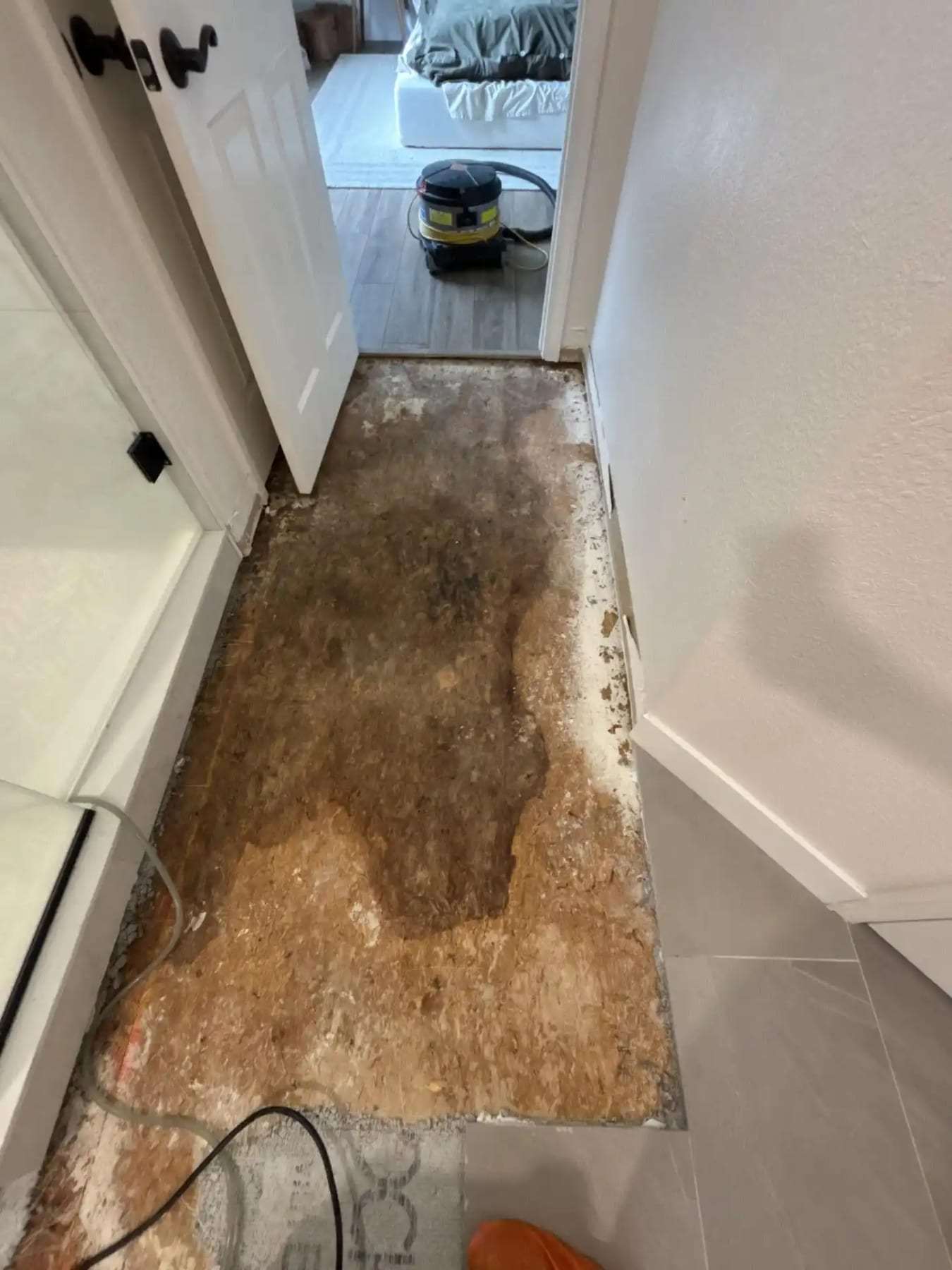
Hallway with the flooring removed and a dark moisture stain on the subfloor. Shown to illustrate the work described; not a job for this site or at any address named here.
Reading the clues
These are common patterns; a plumber with a camera confirms the cause.
- IfWater rises in the floor drain when the washer drains or a toilet flushes upstairsThenThe main sewer line between the house and the street is likely blocked.
- IfOnly one fixture drains slowly and nothing comes up the floor drainThenThe blockage is probably in that fixture's branch line, not the main.
- IfWater comes up during a heavy storm even when nobody is using waterThenStorm water may be entering the sewer system; ask the plumber and your sanitation provider about a backwater valve.
- IfBackups keep returning after the line is clearedThenAsk for a camera inspection; roots, offsets or a sagging section may need repair, not just cleaning.
Why older lines back up
Houses built in the 1950s and 1960s commonly had clay or cast iron sewer laterals, the private line running from the house to the public main. Clay joints let tree roots in, and Lakewood's mature street trees have had decades to find them. Cast iron corrodes and scales inside. Either can narrow until grease, wipes or paper catch and block the line.
The floor drain is usually the first place the backup appears because it is the lowest drain in the house. Everything flushed or drained above it heads down to the blocked line, has nowhere to go, and rises at the lowest opening.
What to do in order
Stop all water use
Tell everyone not to flush, shower, run the dishwasher or do laundry until the line is cleared.
Call a plumber or drain service
Clearing the line is the first priority. Ask for a camera inspection once it is open.
Call your insurer
Sewer backup is often covered only with a specific endorsement; ask what applies.
Document the damage
Photograph the drain, the water level and affected materials before cleanup.
Arrange proper cleanup
Contaminated porous materials are removed, hard surfaces are cleaned and disinfected, and the area is dried.
Reducing the chance of another backup
- Ask whether a backwater valve is appropriate for your line and whether a permit is needed.
- Keep grease, wipes and paper towels out of drains.
- Schedule a camera inspection if the house has original clay or cast iron lines and large trees nearby.
- Keep the floor drain grate clear and do not store boxes over it.
- Ask your sanitation district whether the public main has had known problems on your street.
General information for Lakewood, not a quote or professional advice. In an emergency, call 911.